
How much should an immigration firm spend to sign a client?
 By Victor van Hoorn PerezUpdated
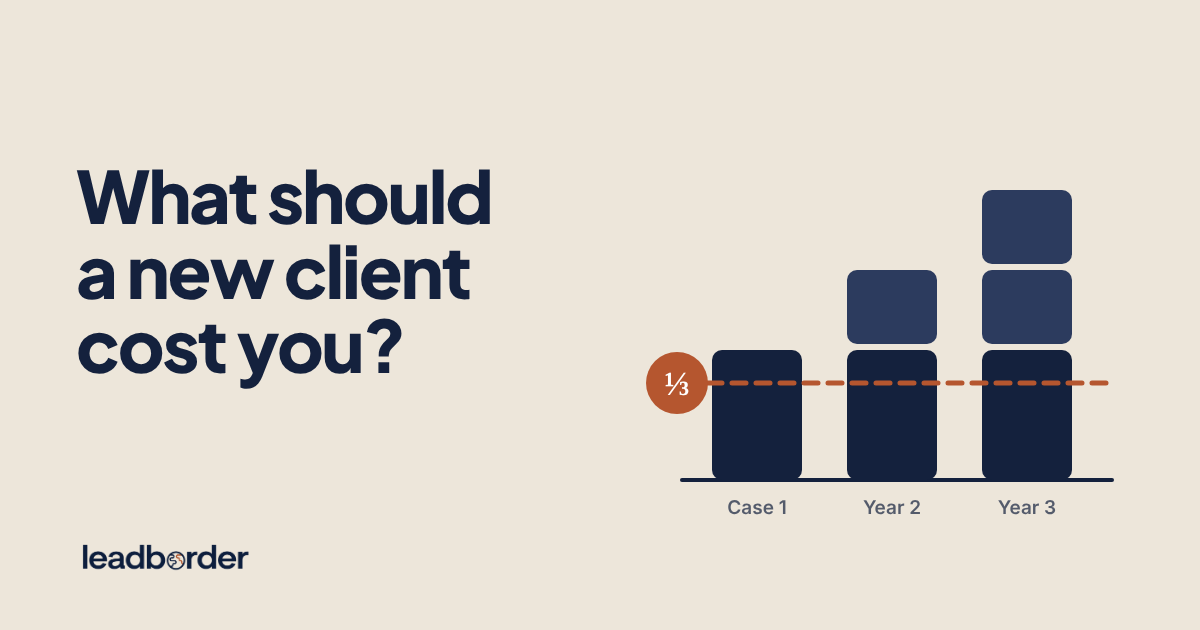
Your first case with an immigration client is rarely your last.
If you do a good job, they might come back for the renewal, then permanent residence, and years later for citizenship. Yet when a firm decides what it can spend to sign a new client, it usually only looks at the return on the first case.
That makes the budget too small. One example runs through this whole post to show a better way to set it. The numbers are made up, so swap in your own.
What is one client worth to you?
Start with everything a client pays your firm over the years, not just the first fee. This is the client's lifetime value.
In our example, the first case pays 2,000 (in whatever currency you bill). The average client comes back for later work worth another 1,000. So one client is worth 3,000 to your firm.
To find your own number, pull the clients you signed three to five years ago. Add up what each one paid you after the first case and take the average. Then add it to your first case fee.
How much should you spend to sign a client?
A common rule of thumb is to spend up to a third of a client's lifetime value on acquisition. The other two thirds pay for the work and leave you a profit.
In our example, a third of 3,000 is 1,000. That is the most you would spend to sign one client.
If you only counted the first case, you would get a third of 2,000, which is 667. Same firm, same clients, but a third less to spend on growing.
Isn't a third a lot?
It can feel that way, because most firms compare it with referrals. A referral costs you close to nothing.
The problem is that you can't decide how many referrals come in. Once you want to grow past them, you have to spend on marketing to bring in new clients. And the more you grow, the more each new client costs.
So look at total profit, not just the margin on each client. In our example, say the work on a case costs you 1,000:
- A referral client leaves you 2,000 in profit.
- A client you spent 1,000 to sign leaves you 1,000.
The second client earns you less, but it still earns you money. If referrals bring you 20 clients a year, that is 40,000 in profit. Sign 15 more through marketing and you make 55,000.
What does that mean per lead?
A lead is not a client yet. Only some leads sign, so you need one more number: your signing rate.
In our example, 1 in 10 leads signs. That means you need 10 leads to sign one client. With a budget of 1,000 per client, you can pay up to 100 per lead.
Here is the whole example side by side:
| Counting the first case | Counting the lifetime value | |
|---|---|---|
| What a client is worth | 2,000 | 3,000 |
| Most you spend per client (a third) | 667 | 1,000 |
| Most you pay per lead (1 in 10 signs) | 67 | 100 |
A lead priced at 80 looks too expensive in the first column and fits easily in the second.
Your signing rate matters just as much. A firm that calls new leads within minutes and keeps following up signs more of them, so each lead is worth more to that firm. We cover that side in Cost per lead vs. cost per signed case.
Where do you start?
You need three numbers:
- Your first case fee for the type of case you want more of.
- What past clients paid you after that first case.
- Your signing rate from any lead source you have used. Your own website form counts.
A rough count from 20 or 30 old files is enough. With those three numbers you can work out what a client is worth, what you can spend to sign one, and what a lead is worth to your firm.
Frequently asked questions
Why a third, and not half or a quarter?
A third is a rule of thumb, not a law. It leaves two thirds of a client's value for the work and your profit. If your margins are high you can spend more. If the work takes a lot of staff time, spend less.
What if I don't know my lifetime value yet?
Use the first case fee. It gives you a safe, lower budget. Then start tracking what clients pay you after the first case and update the number once a year.
Should the first case pay for signing the client?
Ideally, yes. Later work can take years to arrive. If the first fee covers what you spent to sign the client, you get your money back right away and don't depend on future cases.
Does this work for one-off cases?
Yes. If a case type brings no repeat work, its lifetime value is simply the first fee. The method stays the same.
Read next
Want more immigration clients?
A few quick questions about your firm. It takes less than a minute, and we’ll get back to you personally.
Talk to usWritten by
Victor van Hoorn Perez
Victor runs Leadborder, which generates qualified immigration leads for law firms through its own immigration brands.