
Exclusive or shared leads: what you're really paying for
 By Victor van Hoorn PerezUpdated
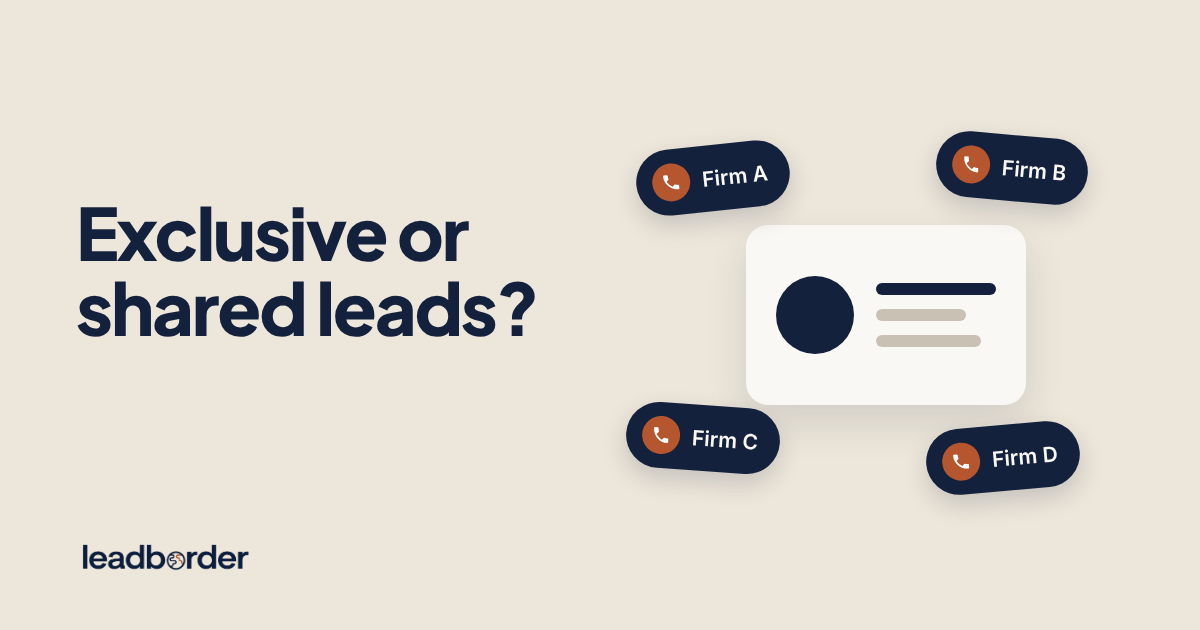
One of the first questions firms ask me is whether our leads go to anyone else. It is the right question. The answer changes almost everything about how a lead behaves once it reaches you.
A lead can be exclusive or shared. The price difference is easy to see. The difference in what happens next is not.
What is the difference between exclusive and shared leads?
An exclusive lead goes to one firm only. Nobody else gets the same person's details.
A shared lead is sold to several firms at the same time. Three or four firms may get the same name, the same phone number and the same form within minutes.
Both can be called "qualified". Both can come from the same kind of ad. What you are buying is very different.
What happens when a lead is shared?
Put yourself in the person's place. They filled in one form about their case. Within the hour, their phone rings four times. Four firms, four voices, four slightly different stories.
Some people pick whoever called first. Some pick whoever sounded calmest. Many stop answering their phone altogether.
For your firm, that turns every lead into a race. Your intake team has to call within seconds, not minutes. The first call becomes a pitch to stand out, instead of a conversation about the person's case. And if you do get to a consult, the person is often comparing your fee with three others they heard that same day.
Why do shared leads still look attractive?
Because the price per lead is lower, and the volume can be higher. On a spreadsheet, that looks like more chances for the same money.
I understand the logic. A firm with a large, fast intake team can sometimes make it work. But most immigration firms are not built to win phone races. They are built to give careful advice. Shared leads reward the first one, not the second.
How does an exclusive lead change the first call?
You stop racing and start listening.
When you are the only firm calling, you can take a few minutes to understand the person's situation. You can ask about their date, their worries and who else is involved in the decision. You can end the call with a booked consult, without feeling that someone else will grab them first.
That is where the value of exclusivity sits. Not in the lead itself, but in the time and attention it gives your firm on the first call. A person who feels listened to on that call is far more likely to book the consult.
What should "exclusive" mean in writing?
The word is easy to use and hard to check. Before you buy, ask the vendor to confirm these points in writing:
- One firm per lead. Nobody else gets the same person's details at the same time.
- No reselling later. The lead is not sold again after a few days or weeks.
- No reselling under another name. The same person is not sold to other firms through a different brand or website.
- What happens with duplicates. If the same person fills in a form twice, they should not reach you as two leads.
A good vendor answers these quickly and clearly. If the answers stay vague, treat the leads as shared.
How do you compare the cost of exclusive and shared leads?
Not per lead. Per signed case.
An exclusive lead costs more up front. But if it signs more often, because you had the time to do the first call properly, each new client can cost you less. A cheap shared lead that rarely signs is the expensive one.
Count the time too. Every shared lead your team chases, calls five times and loses to a faster firm is time not spent on people who could become clients.
Which one fits your firm?
Shared leads can fit a firm that has:
- a large intake team that can call within seconds, all day
- low fees per case and a need for volume above everything else
- a process built around speed more than advice
Exclusive leads fit a firm that:
- wants to spend its time on fewer, better conversations
- earns meaningful fees per case
- wins clients through a good first call and a strong consult
Most of the immigration firms I talk to are in the second group. They don't want more names. They want more people they can sign.
What should you ask before you buy?
Keep it simple. Ask any vendor, us included:
- Is every lead sent to one firm only?
- Is it ever sold again later, or under another brand?
- How quickly does a lead reach me after the person fills in the form?
- What exactly was checked before it was sent?
The answers tell you what you are really paying for. The price per lead only tells you what it costs.
Frequently asked questions
Are exclusive leads always better?
Not always. A firm with a very fast intake team and a lot of volume can make shared leads work. For most firms, though, the first call goes better when nobody else is calling the same person at the same time.
Can a vendor sell the same lead again later?
Some do, for example after a few days or weeks. That is why exclusive should be defined in writing: one firm per lead, and not resold later or under another brand.
How can I tell if a lead was shared?
Listen on the first call. If the person says another firm already called them about the same form, or sounds tired of calls, the lead was probably sold more than once. Ask your vendor about it directly.
Do exclusive leads sign by themselves?
No. Exclusivity gives you time and attention. Your firm still has to call fast, run a good consult and follow up until the person decides.
Read next
Want more immigration clients?
A few quick questions about your firm. It takes less than a minute, and we’ll get back to you personally.
Talk to usWritten by
Victor van Hoorn Perez
Victor runs Leadborder, which generates qualified immigration leads for law firms through its own immigration brands.