
How immigration clients decide: the four stages before they hire a lawyer
 By Victor van Hoorn PerezUpdated
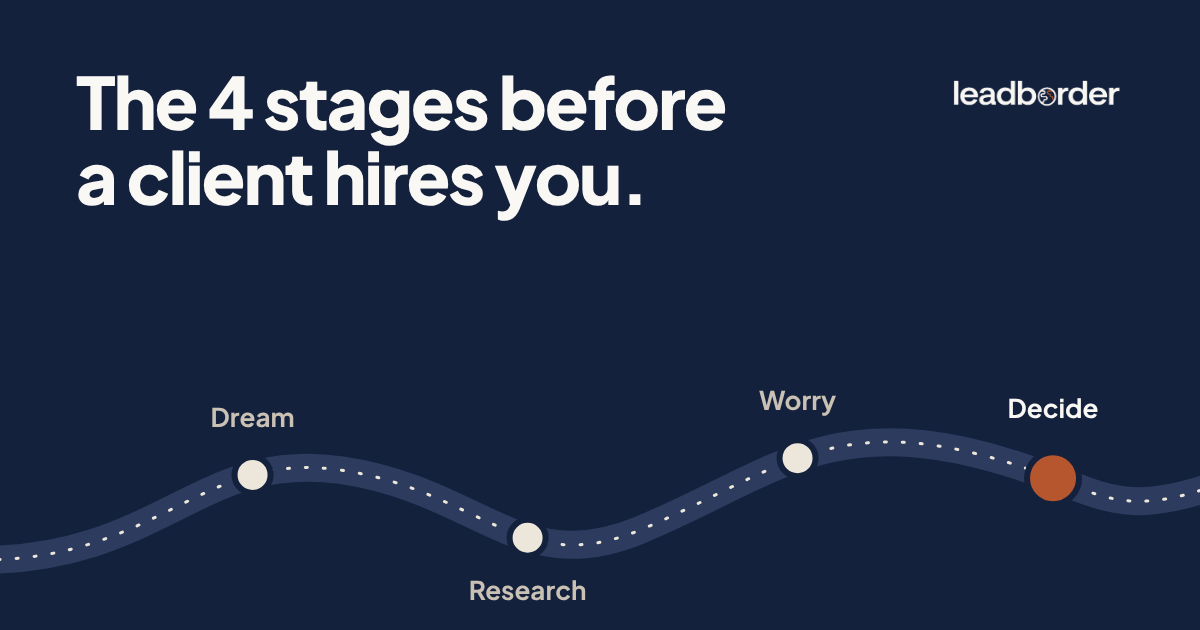
Starting an immigration process is one of the biggest choices a person makes. It takes months, not days.
I run immigration lead campaigns every day, and I see the same pattern again and again. People pass through four stages before they hire a lawyer. Your firm usually meets them in the third, at the consult, and signs them in the fourth.
What are the four stages?
- Dream. They picture a new status: a life in a new country, a green card, a path to citizenship. They watch videos and save posts. Nothing is decided.
- Research. They compare their options and read the rules. They ask strangers in online groups.
- Worry. They fear a rejection, a wrong form or wasted money. This is where many start looking for a lawyer and ask for a consult. Others stall.
- Decide. A deadline or a start date gets close. Now they want an expert, and they want one fast.
People can sit in one stage for a long time. They can also slide back. A job change or a change in the rules can send someone from "decide" back to "research".
Where are most people when they first reach out?
Earlier than most firms think. In my experience, many of the people who fill in an immigration form online are still dreaming or researching. They are curious. They are not ready to hire anyone yet.
That is not a problem. It only means a form fill is not a decision, and a firm should not treat it like one. The question is not only whether someone is interested. It is how close they are to acting.
Why does the stage matter so much to a law firm?
Because the same person is a different prospect at each stage. They can be a free consult in month one and a signed case in month six.
Meet them in the dream or research stage, and you give free advice to someone who is not ready. You spend an hour, they say thanks, and they go back to their videos. Meet them in the worry stage, and you talk to someone who is looking for a lawyer and wants a consult. Meet them in the decide stage, and you talk to someone who is ready to sign.
So "is this lead real?" is only half the question. The other half is "what stage is this person in?"
Why does the worry stage bring consult requests?
Because the worry is what sends people looking for a lawyer. The fears are practical. They are afraid of being rejected and losing months. They are afraid of filling in the wrong form. They are afraid of paying for help they did not need.
More information rarely helps at this point. They have read enough. What helps is a person who says: here is what your case needs, and here is what happens next.
That is when people ask for a consult. Someone who fears a rejection does not want another video. They want an expert to look at their case.
You can often hear it in the first minutes of a call. A person who asks "what happens if I get this wrong?" is in the worry stage. Answer that question well, and the consult usually follows.
The consult is where your firm earns the case. When their date gets close and they decide, they sign with the firm that took their worry seriously. The ones who stall are often the ones who never found a firm they trusted.
How can you tell which stage a lead is in?
Ask a few plain questions. The answers tell you more than any lead score.
- When do you want to start the process? A person with a date or a deadline in the next few months is close to deciding.
- Do you meet the basic requirements of your case? Someone who has checked this has already done their research.
- Do you want a professional to handle your case? Some people only want to check their plan before doing it themselves.
Good lead sources ask questions like these before a lead reaches you. Whatever the source, ask them again on the first call. Plans change, and the answers tell you how to talk to the person.
What should a firm do with people who are not ready yet?
Don't drop them. Don't push them either.
A person in the research stage will remember the firm that answered one question well. Keep the first contact short and useful. Find out when they want to start, explain what the process looks like, and agree on when to talk again.
When the worry sets in, they start looking for a lawyer and ask for a consult. By then, you want to be the firm they already know.
What does this mean when you buy leads?
Judge a lead source on stage, not only on volume. Ten people in the worry stage are worth more than fifty who are still dreaming.
Ask any vendor how they reach people at the right moment, and check the answer on your first calls. If most of the people you speak to are still collecting free information, the source is reaching them too early.
Frequently asked questions
How long does it take an immigration client to decide?
It varies a lot by case. Some people research for a year or more. Others have a deadline and decide within days. The closer their date, the faster the decision.
Should a firm offer a free first consultation?
That is your call, and the stage matters. A free call costs you little with someone who is worried or ready to decide. With someone who is still dreaming, it often turns into free advice. Many firms keep the first call short and focused on next steps for that reason.
Can a web form tell you what stage a client is in?
Partly. A form that asks when they want to start the process, whether they meet the basic requirements of their case and whether they want professional help tells you a lot. The first conversation tells you the rest.
Can a client go back to an earlier stage?
Yes. A change at work, in the family or in the rules can send someone from deciding back to researching. Stay in touch, and many of them come back.
Read next
Want more immigration clients?
A few quick questions about your firm. It takes less than a minute, and we’ll get back to you personally.
Talk to usWritten by
Victor van Hoorn Perez
Victor runs Leadborder, which generates qualified immigration leads for law firms through its own immigration brands.